

Do you view the world as a prostitute or as a mother?
I’m serious.
Do you see the world God created as a giant temptress, waiting to lure us away from true faith and devotion, or do you see it as a mother who nurtures our faith and disciplines us toward pure devotion and abundant life?
There’s a “catch” behind my question, of course. The Bible presents the world in both lights. Various passages warn about the world’s allure, while other passages celebrate its abundance and goodness. The great question is how do we reconcile these two apparently opposing viewpoints?
Unfortunately, many traditions focus on one in exclusion to the other. Most often, we choose the negative: The world is a threat, a menace, a temptress. Such traditions deeply suspect any enjoyment in this world and seriously undercut the beauty and goodness of God’s creation. They speak as if our job as imprisoned souls is to deny any sensual experience of any kind—and certainly any pleasurable sensual experience—lest we lose our appetite for prayer, worship, and Bible study.
Some traditions of Christianity have had a very slanted and negative view of the world, in a way that injures our souls, opposes abundant life, and dishonors the God who created a wonderful place for us to live. When John tells us not to love the world or anything in the world (1 John 2:15-17), and James tells us that friendship with the world is hatred toward God (4:4), they do not instruct us to despise the sound of a baby’s laugh, the taste of cold watermelon on a hot day, or the drama of achievement; instead they warn us away from finding our happiness, meaning and fulfillment in social systems, polluted appetites, or actions that antagonize God. John makes this crystal clear when he defines the world’s sinful cravings as lust, boasting, and wayward desires. In other words, these biblical writers condemn polluted pleasures. The problem is that we take the Bible’s condemnation of the “world” as condemnation of the “earth.” This serious mistake has unfortunate consequences to our souls and our view of life. Much of the “world” stands against God and rebels against him; God created the earth to reveal himself to us and to provide a place where we can enjoy him.
For spiritual health, we have to learn how to enjoy the earth without loving the world. The starkest biblical difference between enjoying the earth without loving the world is that by surrendering to God, we enjoy the earth as God intends it to be enjoyed—according to His design and under His priorities. This has huge implications for the way we look at food, sex, family, and recreation.
The contradiction between the world as prostitute or mother resolves itself in surrendering to God. When God turns my soul toward him, many of the very things that used to lure me away from his presence now become causes of celebration and worship. Where before food might have captured my heart, now it captures only my taste-buds and makes my heart sing for such a generous God. Where before acclaim might have captured my soul, now it humbles me and leaves me standing in awe of such a capable God. Where before family might blind me to the eternal, now it gives me a picture of what it means to be part of his heavenly kin. While earthly pleasures aren’t ends in themselves, they can effectively serve as signposts to God and doorways to gratitude and spiritual intimacy.
Under the “world as prostitute” system, you have no room to enjoy or find new strength in God-given pleasure. What a healthy person would call “taking care of yourself,” you’ll call pampering and self-indulgence, driving yourself until you break down. Instead of thanking God for showing his love by providing you with delicious food for your enjoyment, you’ll feel like a glutton if you take the time to actually taste the food. Rather than reveling in the pleasure of getting a massage, the fellowship of playing a round of golf with your buddies, or the relaxation of staying home with your spouse and watching an old movie, you’ll despise all these experiences as somehow “beneath” you and as unworthy distractions for someone as important and committed as yourself—after all, you could be saving the world or sitting inside a church.
May I reintroduce you to the wonder of enjoying the earth in a healthy and godly way without loving the world?
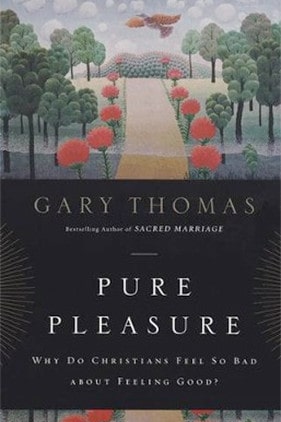
I grew up thinking pleasure was the problem. Now, I believe when it comes to spiritual growth that pleasure is part of the solution. This thinking was so revolutionary for me I ended up writing an entire book on it: Pure Pleasure: Why Do Christians Feel So Bad About Feeling So Good?
I want to spend some blog posts exploring this theme, but before I do, help me out with where all of you are. Please share in the comments below whether you also have struggled with learning to “enjoy the earth without loving the world.” Has accepting pleasure been a challenge for you? Or do you think you’ve fallen off the other end and become over-pleasured? Let’s start a conversation.
Thank you, Gary, for opening up this dialogue. Also, thank you to those who shared comments. I have been truly blessed by both. God is amazingly faithful, and I am grateful to Him for guiding and teaching me through your testimonies. To God be ALL the glory!
Thank you for this thought provoking post. In my childhood, idleness was not allowed, so I learned to stay busy and deny myself the rest and refueling I needed. This extended to guilt when reading a good book, or taking a seat to rest and enjoy watching the birds. In the past few years (starting in 2013) my family has suffered a lot of stress; multiple parents in need of care in another state, flooding of our home after a hurricane, rebuilding the home, death of multiple family members, continued care of difficult parents, the pandemic during which my husband retired. God began to show me the importance of self care, and a wise counselor began to point this out to me, too. Since then I have begun to take time to take walks, watch birds, talk with neighbors, no matter what awaits my attention. Life has become more measured, and I am less harried. I look forward to reading more from your book. Thank you!!
I was part of the early homeschooling movement which was mainly Christian, where there was a strong belief that if we could just shield our children from being exposed to “the world” by schooling them at home, we could produce godliness in them. People who put their children back in school were viewed by the rest of us as quitters who were sacrificing their children to the devil. None of this was ever directly said, but it was very much implied. A lot of these kids became very rebellious once they were out of the control of their parents, not surprisingly. They learned that Christianity is a joyless prison and wanted no more of it. A few are now sad adults who themselves never really grew up and learned to choose for themselves, and are raising their own kids in the same legalistic prisons they were raised in. Since the emphasis on outward appearance was so strong, there was not freedom to be open and transparent about our failures with one another. That is the kind of atmosphere legalism creates.
Definitely can relate to this blog post!
I struggle to enjoy the things of the earth such as good music, wine or even a good book because of the constant fear that it will draw me away from God…